Engineering Consulting
The projects other shops
pass on.
Complex, unconventional builds that look impossible on paper. Software, hardware, and rapid prototyping — from a rough idea to something you can hold in your hands, and then to something you can actually manufacture. Every engagement starts with a prototype, but production is the goal from day one.
Automotive is the core focus. It isn't the limit — the same expertise applies to any project that needs to be designed, built, or made real.
Software
- Web design & development
- Embedded software & firmware
- Real-time control and sensor logic
Hardware
- PCB design, single- to multi-layer
- Embedded systems & board bring-up
- Automotive-grade part selection
Rapid Prototyping
- 3D modeling & mechanical design
- Printed and machined parts
- In-hand prototypes, fast
Physical and digital both — engineered parts, embedded firmware, PCB design, and the software that ties it all together. Backed by deep familiarity across materials and manufacturing methods, and established connections across several industries to help carry a project the rest of the way.
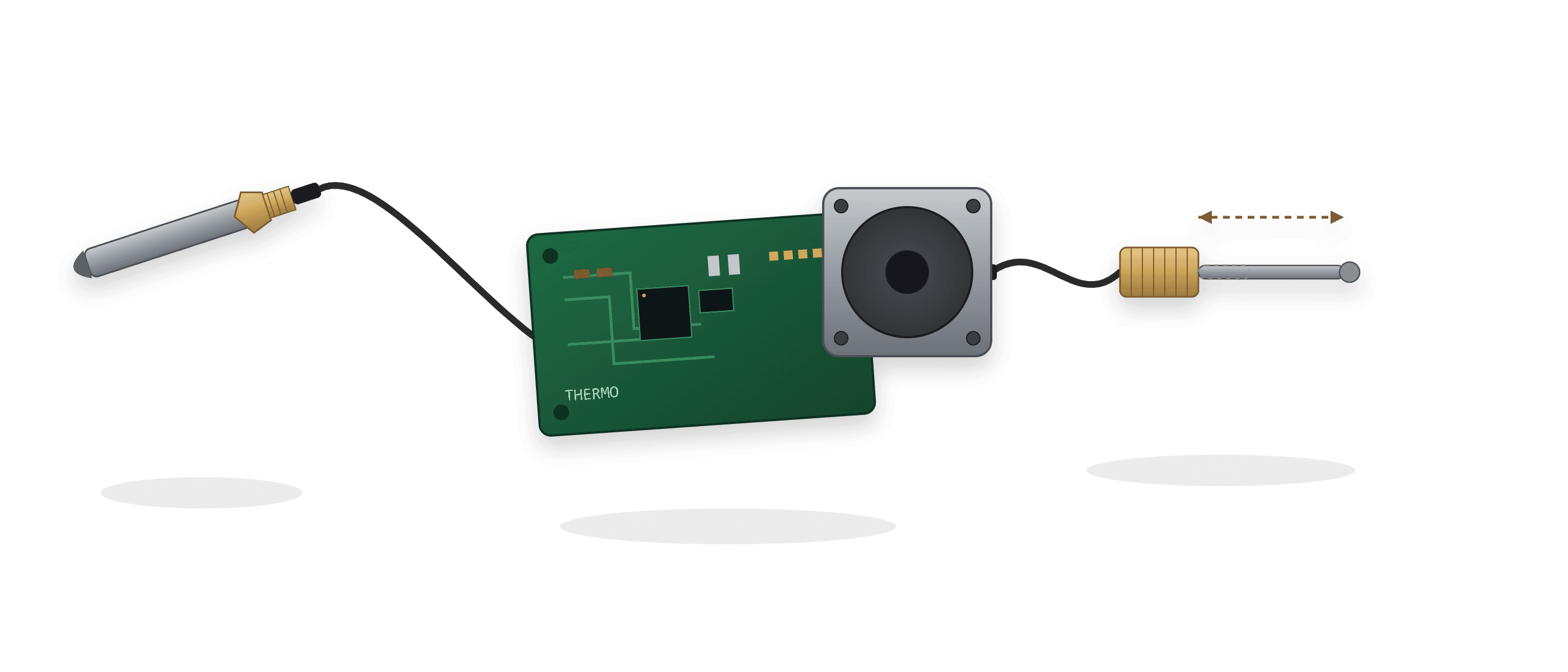
Case study · SPICA actuator
One example: the part didn't exist anymore.
A 1972 Alfa Romeo GTV uses a mechanical thermostatic actuator that hasn't been manufactured in decades. No supplier, no aftermarket equivalent, no reasonable path to a replacement.
So we stopped trying to source it. An automotive temperature sender feeds a 16-bit ADC; firmware converts resistance to temperature against the sensor's published curve and drives a captive linear stepper that does mechanically what the original did with expanding wax. 67.7 × 48.9 mm, four layers, automotive-qualified parts end to end, with a sealed connector harness sized for the engine bay.
Proof, not adjectives
Every project below has public documentation — connector pinouts, parts lists with real manufacturer numbers, and a section that says plainly what isn't proven yet.
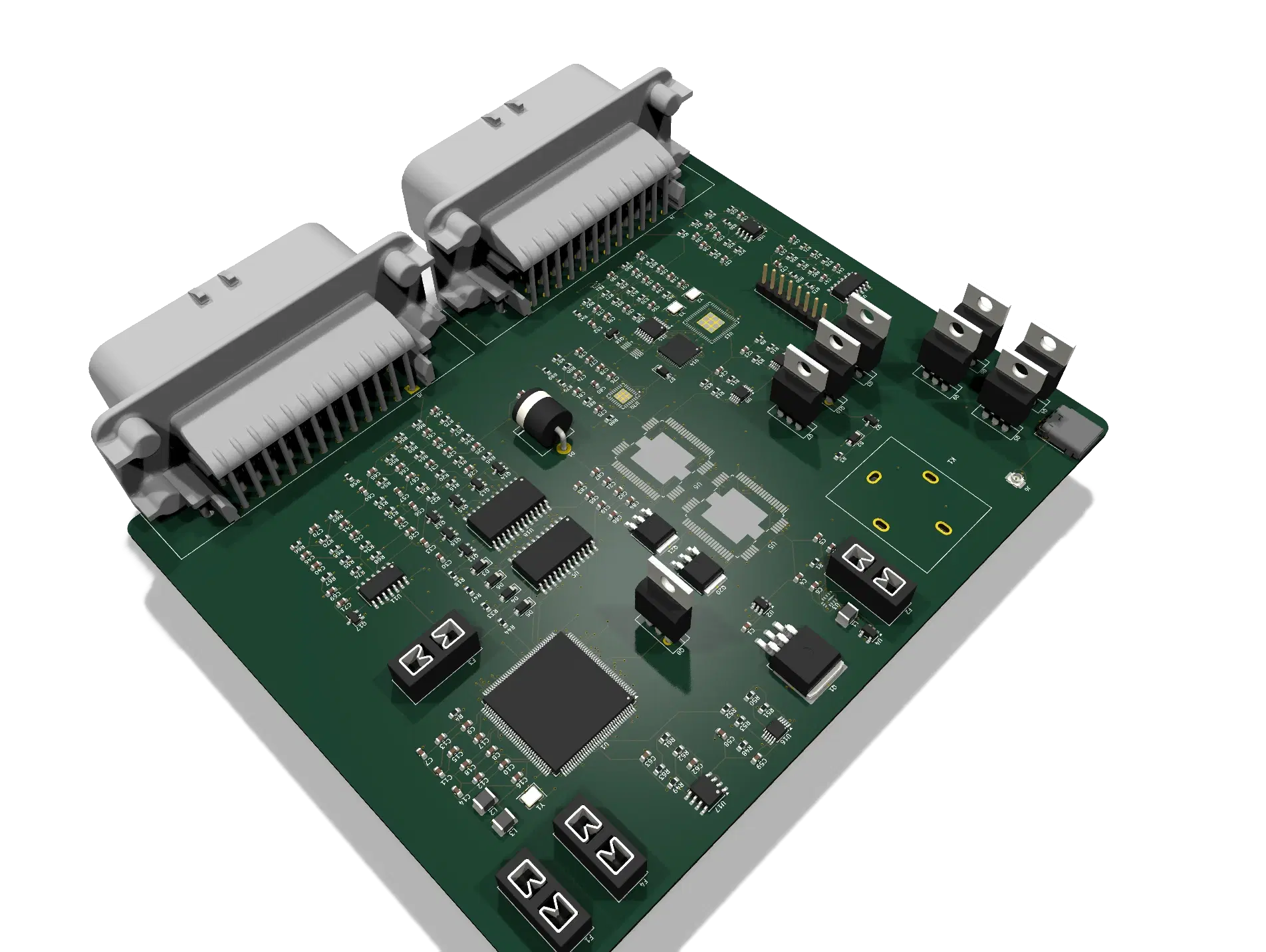
ECU
No off-the-shelf ECU wanted to run the engine, so we built one. Eight injectors, eight coils, wideband oxygen sensing, knock detection, drive-by-wire throttle, dual CAN, reflashable over USB-C or Bluetooth. Eight layers, 224 components, 236 nets, fully routed and DRC-clean.
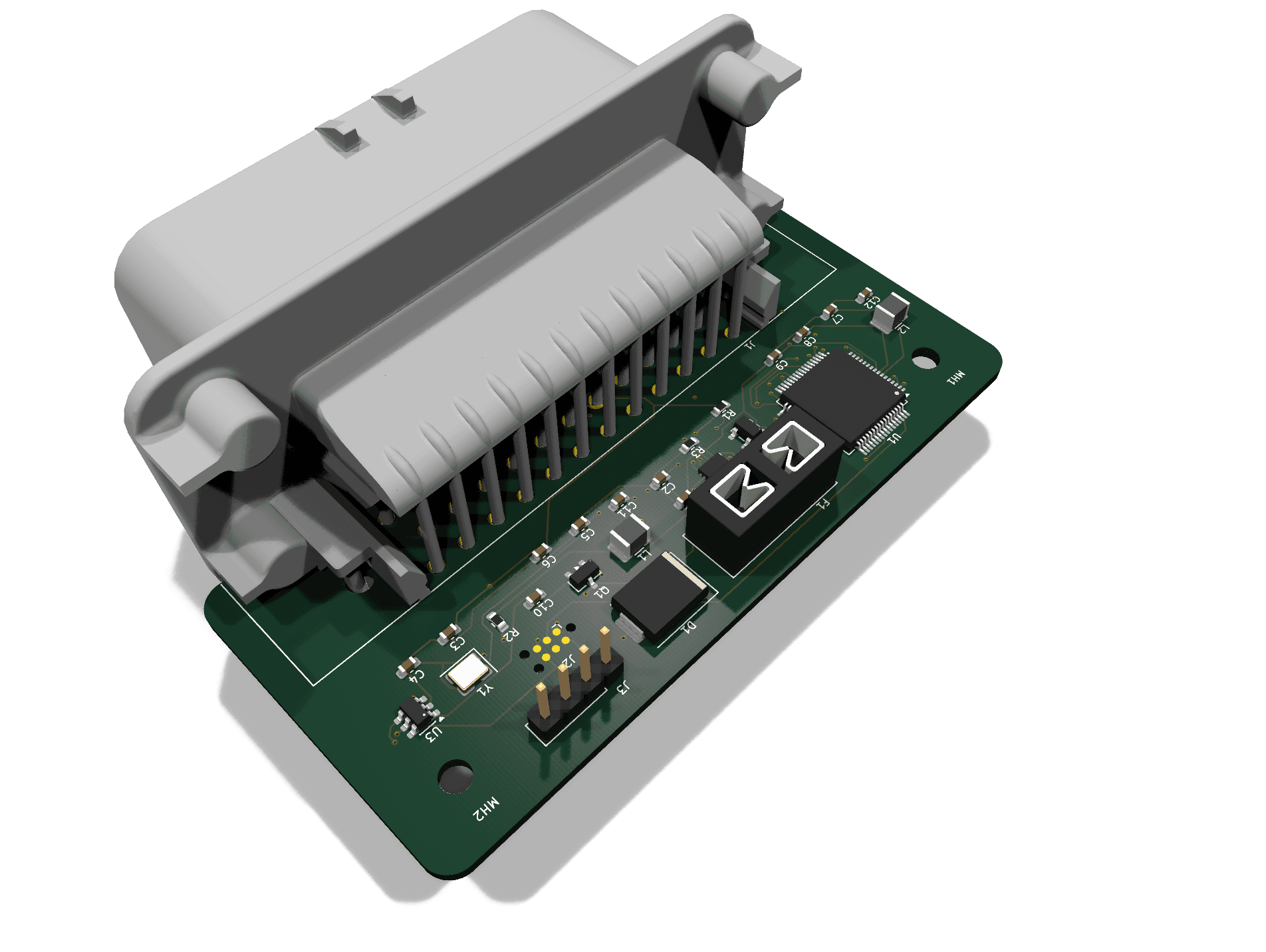
Manifold
A controller board rated to live in an engine bay rather than under a dash — reverse-battery protection, load-dump clamping, a sealed 35-way harness connector, and an AEC-Q100 automotive MCU. Every part number verified live against distributor stock, not recalled from memory.
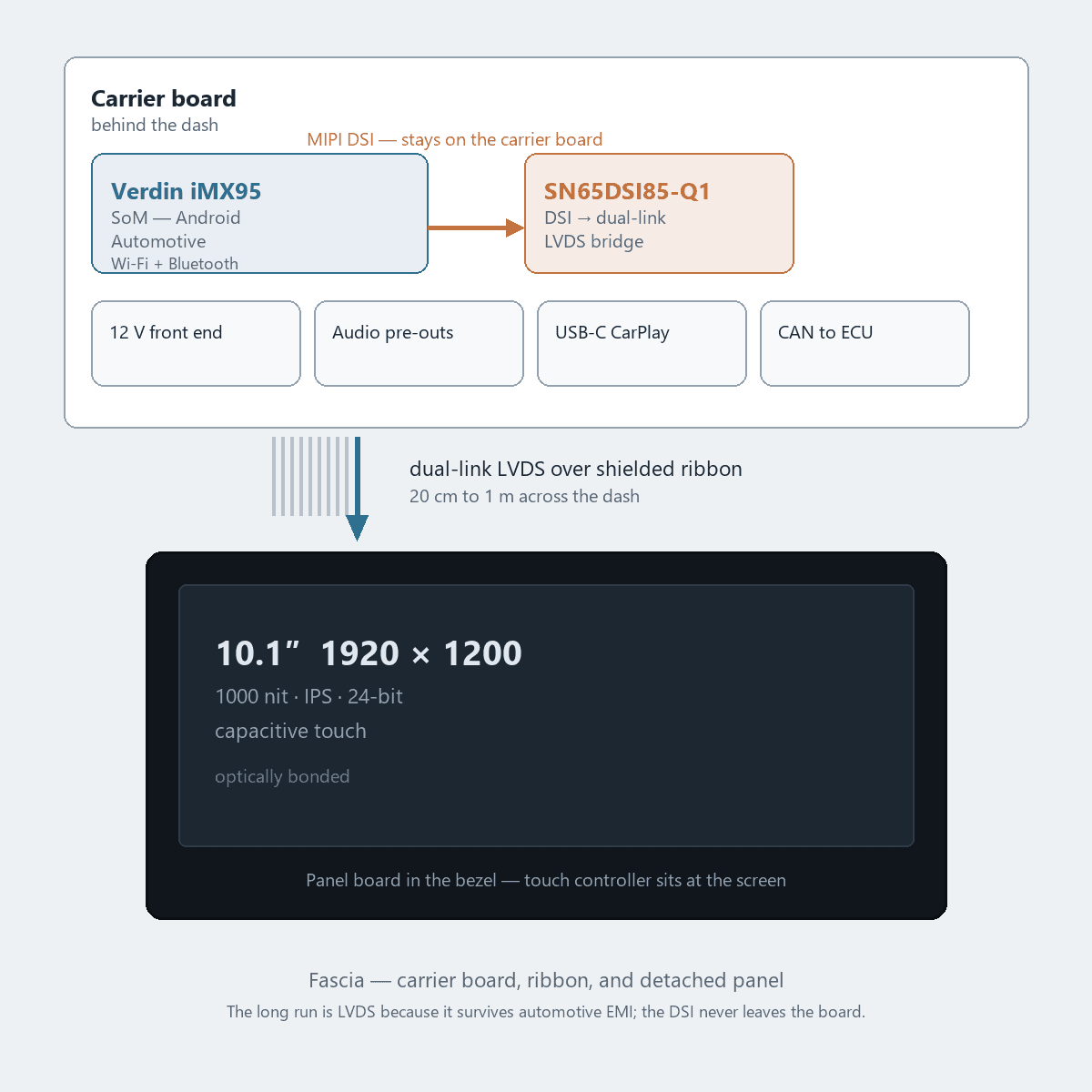
Fascia
A dash that needed to be modern without looking wrong. A ten-inch Android Automotive head unit built around a real automotive SoC and a display bridge — CarPlay, Bluetooth, line-level outputs to a proper amp, in a car built decades before any of it existed. Schematic complete; board layout still ahead.
How the work runs
Four stages. You can stop after any of them — plenty of projects only ever need the first.
Feasibility
Is this even the right approach?A short, fixed-fee study. We research the real parts, check what's actually available to buy, and work out whether the thing you want is buildable at the quantity and budget you have.
You get
- Written assessment of the approach
- Rough cost and schedule range
- An honest go / no-go — including “don't build this”
Design
What exactly are we building?Schematic capture, board layout, mechanical modeling, and part selection against real datasheets — with distributor availability checked rather than assumed.
You get
- Reviewable schematic and board layout
- Bill of materials with real manufacturer part numbers
- 3D models for anything mechanical
Prototype & validate
Does it actually work?Fabricate, assemble, bring it up on the bench, and test it. This is where assumptions meet reality and some of them lose.
You get
- Working hardware in your hands
- Test results, including what failed
- A written list of what is still unproven
Production & handoff
How does this get built for real?Everything gets packaged so a manufacturer can build it — and we stay on through the process rather than dropping a zip file and disappearing. Selecting a fab house, reviewing quotes, answering the questions they come back with, checking first articles, and sorting out whatever the first real production run turns up. The files are complete enough that you could take them elsewhere; you just don't have to.
You get
- Fabrication and assembly files
- Costed BOM with sourcing notes
- Firmware source and build instructions
- Manufacturer selection and quote review
- First-article checks and production support
The design files are handed over at the end, not held hostage — you can take them to any manufacturer, or to another engineer, without asking permission.
Is this the right shop for you
Worth being direct about this up front rather than three meetings in.
Good fit
- The build is complex or unconventional, and you've had trouble finding anyone to take it on.
- Electronics, firmware, mechanical and software all have to work as one object.
- You want a prototype in hand quickly, but you're building toward production.
- The part is discontinued, unobtainium, or never existed in the first place.
- You want the design files at the end — not a black box you can never modify.
- You'd rather hear “here's what's still unproven” than a confident guess.
Probably not
- You need it road-legal and certified next quarter. Automotive-grade parts are not a certification program, and pretending otherwise would be lying to you.
- You need someone to be the factory. We'll help you pick a manufacturer and support the build all the way through — but we don't run the production line ourselves.
- You're collecting the cheapest possible bid. There will always be a cheaper one.
- The design is already fully specified and you just need hands. You'd be paying for judgment you don't need.
Who actually does the work
Two engineers. One writes firmware and integrates complex computer systems for a living; the other spent a decade at General Motors validating vehicles that ship to customers. Between us: embedded software, PCB design, mechanical prototyping, and enough time under actual cars to know which clever ideas survive contact with an engine bay.
You will not be handed to a junior. There isn't one.
Meet the team →Tell us what you're up against
Send a rough description — what you're building, roughly how many, and what's currently blocking it. The weirder the problem, the more interested we are. If we're the wrong shop for it, we'll say so and point you somewhere better.