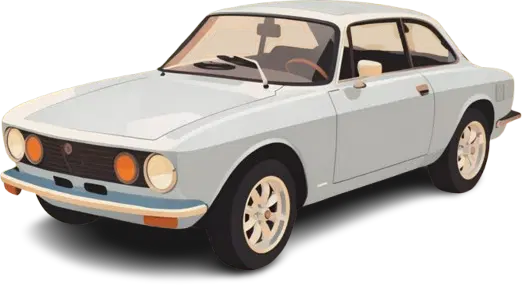
Cluster
One main board, the brain, and a digital instrument cluster built around it for each car. The brain runs the screens, Android Auto and CarPlay, and it's the same in every car. Everything that depends on the car sits on boards of its own.
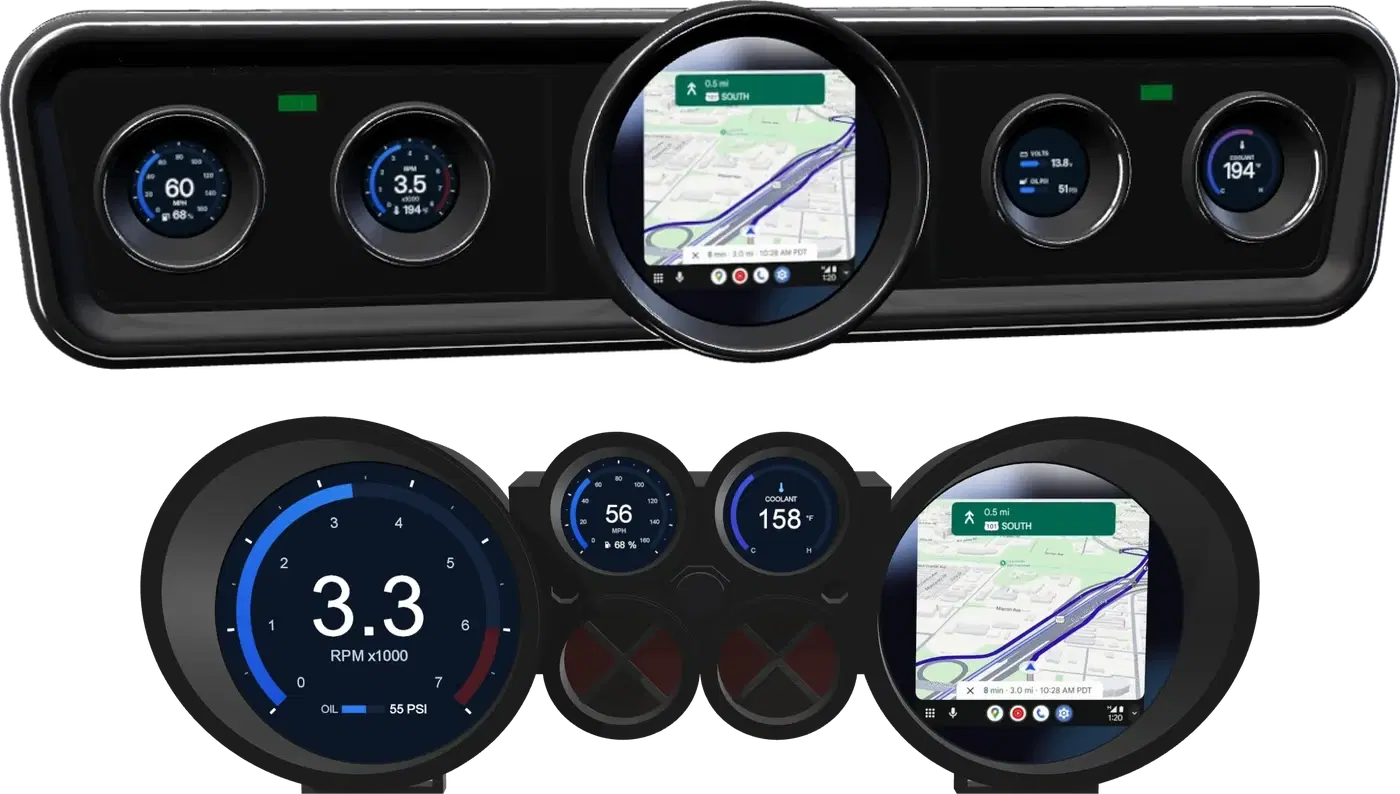
One brain, two clusters
Pulled apart, they have little in common: different screens, different boards, a chrome trim on one and deep black hoods on the other. The green board is the same one in both.
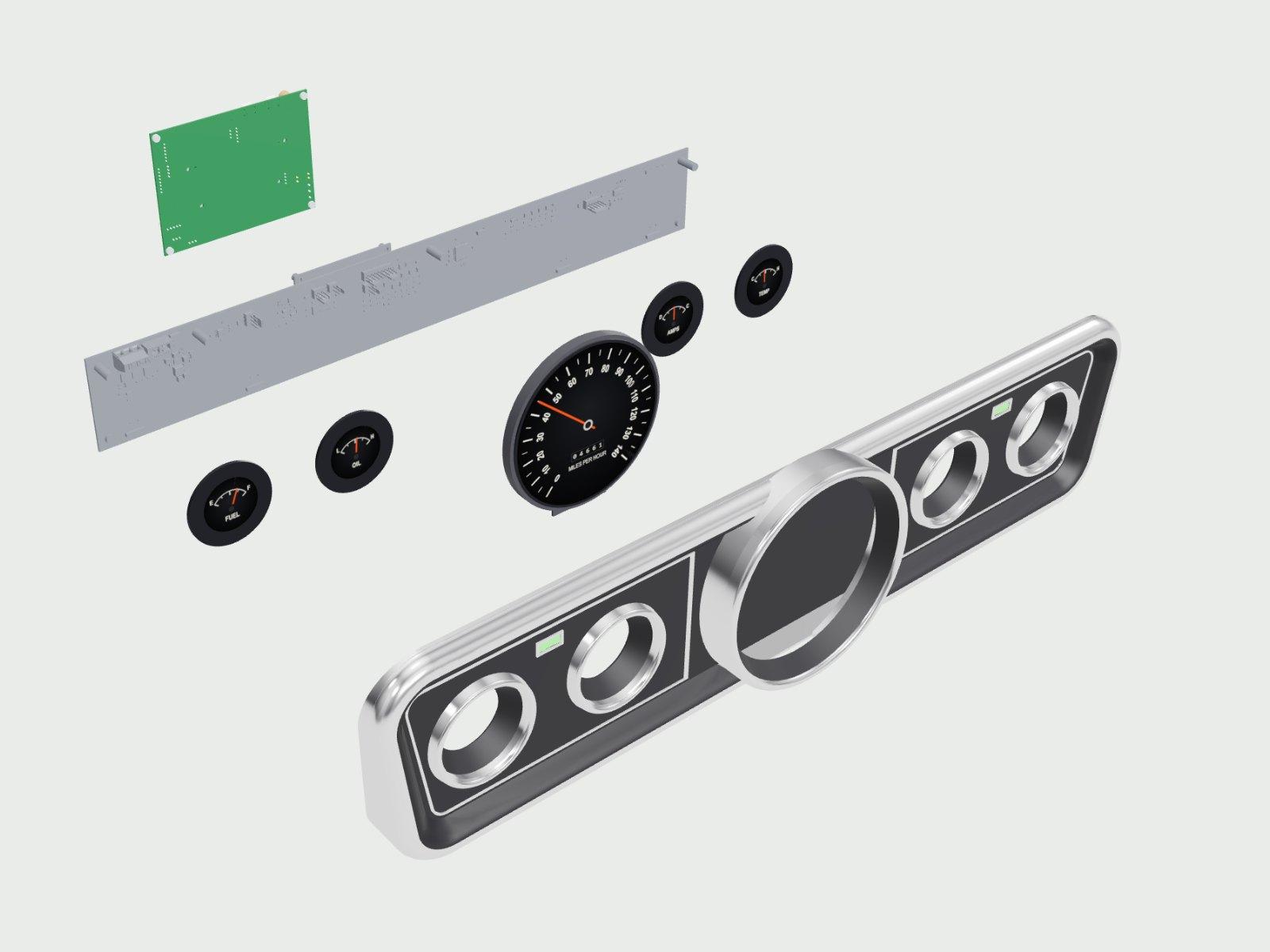
Mustang Cluster
For 1965 and 1966 Mustangs. Five round screens behind a chrome trim, in the stock dash opening.
Routed and checked, not yet built.
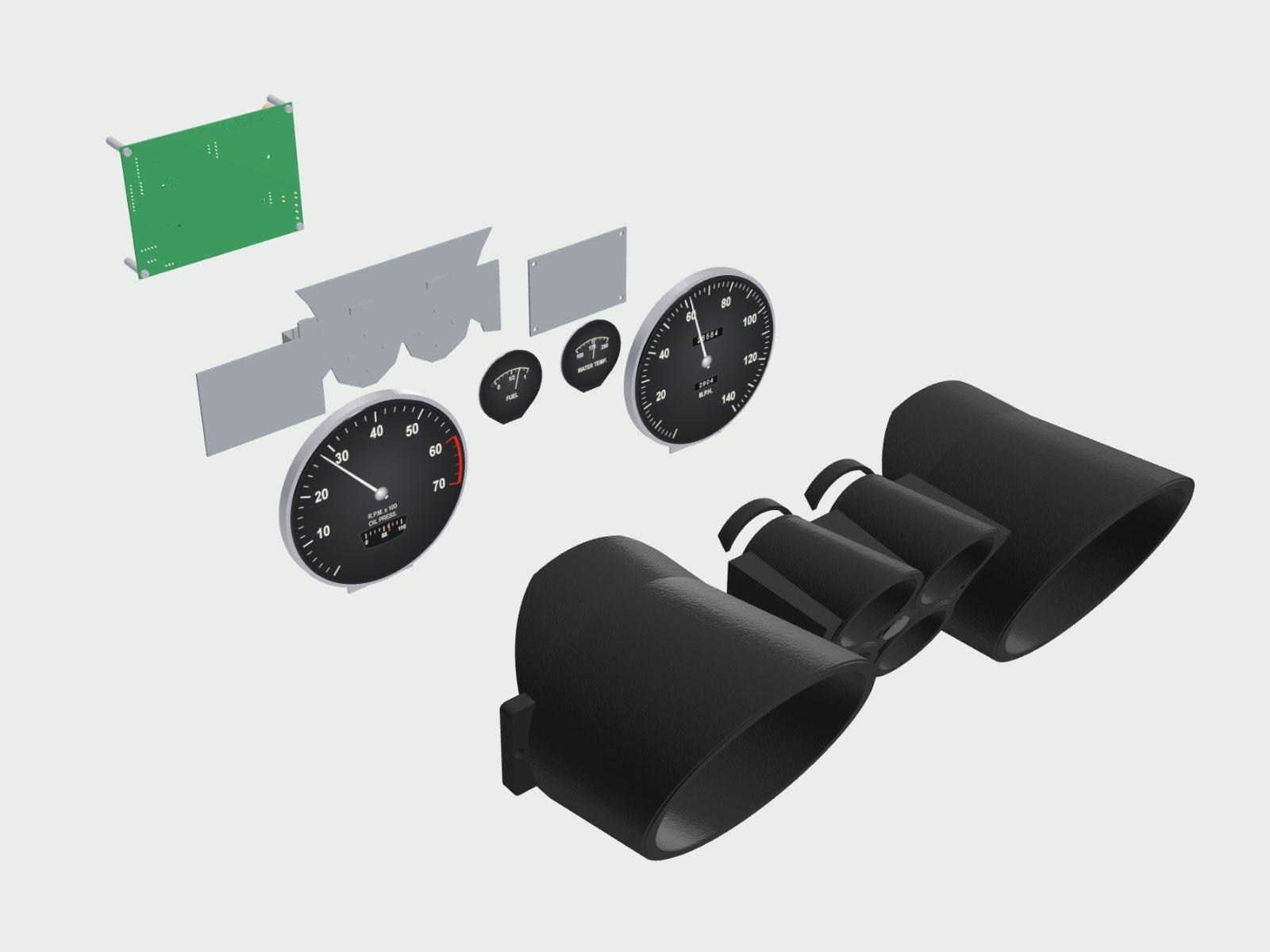
Alfa GTV Cluster
For the 1972 Alfa Romeo GTV 2000. Four round screens filling stock-size hoods.
A first look in 3D. No boards yet.
Renders of the two 3D models, with every board but the brain greyed out.
What stays, what changes
- Same in every car
- The brain board, Linux with LIVI for CarPlay and Android Auto, the private link between the boards, and the firmware's logic
- Made for each car
- The gauges board, the screens and their panel boards, the housing or faceplate, the dial faces, and settings like sender curves and pulses per mile
The brain
The main board, and it doesn't know what car it's in. It holds a computer module running Linux with LIVI, an open-source CarPlay and Android Auto receiver, and it draws the big screens.
Everything that depends on the car moved off it. Each screen sits on a small panel board that carries its connector, its bias supplies and its backlight driver, joined to the brain by a ribbon cable, and a resistor on that board tells the software which panel is plugged in. A new car needs new boards around the brain, generated from the same scripts. The brain stays the same, which is what keeps the cost down.
What's on it
- Computer
- Toradex Verdin iMX95, screwed down on four standoffs as its maker recommends for vibration, with Toradex's own heatsink on the same four
- Software
- Linux with LIVI for CarPlay and Android Auto; Android Automotive as the alternative
- Screen ports
- Two: MIPI DSI, and LVDS for automotive and larger panels (RGB panels through a small converter). Each has its own current-limited power switch
- Phone and sound
- Two USB-C ports, one for the phone and one for add-ons; audio and microphone; and a CarPlay authentication header
- And
- Rotary-dial input, ignition wake circuit, bench headers for the Android console, USB, JTAG and buttons
- Board
- 127.5 × 95.3 mm, 6-layer with two solid ground planes
- State
- Routed, with a generated bill of materials, passing electrical rule checks. Nothing has been fabricated or powered
Two boards, one gateway
The brain talks to the phone, so it never touches the car. Each car's gauges board is the only one on the car's CAN bus, and its firmware is receive-only. It forwards filtered values to the brain over a private two-node CAN link that carries a rolling counter and a CRC, so the brain can read the car but can never transmit on the vehicle bus. The car-bus side has a selectable Haltech V2 profile, and speed comes from either a Hall-effect sender (for cable-driven cars) or the ECU over CAN.
The gauges board also runs the small screens on its own, so they keep going if Linux doesn't.
Still open
- The computer module's maker has not yet confirmed that it runs the two screen ports as two independent screens at once (the chip inside can). The Alfa GTV Cluster depends on that, with a big screen on each port.
- CarPlay needs Apple's authentication chip. The brain has a header with switched power for a small board that carries it, but Apple supplies the chip only through its licensing programme, so there is no part yet; and selling a product with CarPlay or Android Auto needs Apple's and Google's programmes.
Source
Every board is generated from scripts rather than drawn by hand, so the generators are the source of truth. Design notes, the CAN protocol and the fab package are in the repository.